Showing posts with label Outdoor Photography. Show all posts

Monday, June 30, 2014

Sounds Overheard: Saskatoon Saskatchewan


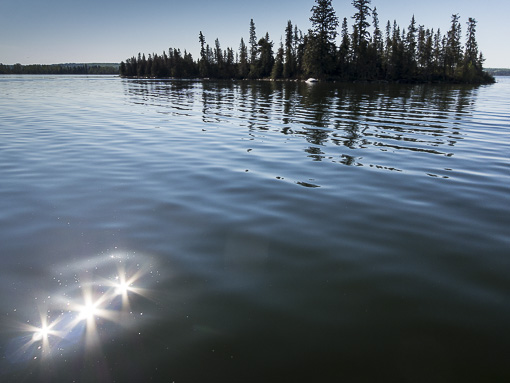
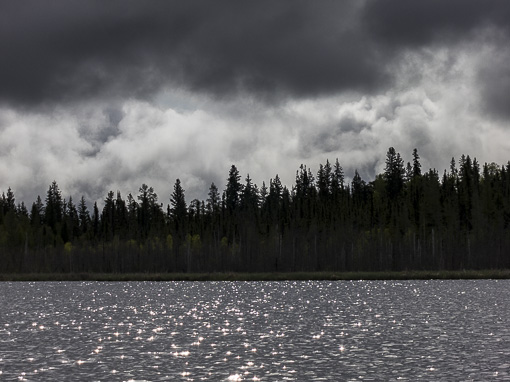
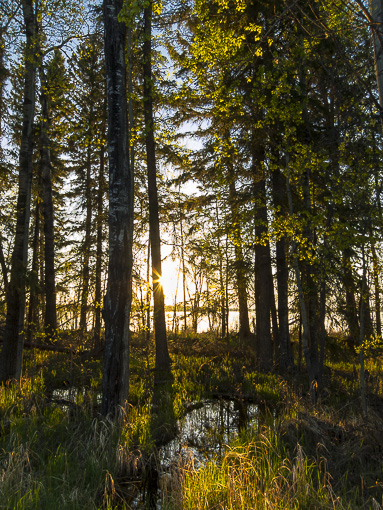
Just a couple of weeks after winter's ice melted on Dore Lake North of Saskatoon, summer's sun warms the waters off Eagle Island. All photos shot with Canon S100 point 'n shoot.


Field-recorded sounds of song birds, yakking raven, buzzing fly, water birds and far off loons are captured on this 1:15 recording. iPhone and iPad version. 

All the Canadians I met earlier this month were awfully nice and friendly, and I know they often vacation down here in Florida when the winters get to be 40 degrees below up north of the border. But do they chuckle at the sound of our Florida names, Miami, Okeechobee, Apalachicola or Boca Raton?  Translated to “Rat’s Mouth”, that last one even makes me smile.

While fishing a couple of weeks ago at Dore Lake, located north of Saskatoon ... giggle ... I just loved the sound of Saskatoon, and spoken with the province Saskatchewan, I enjoyed the geographical mouth full every time I said them out loud. 


For years my brother in law Jo had been telling me about his annual fishing trip, a group of 18 mostly men from the Colorado Springs area that have been making the 1250 mile trek for 29 years. Jo finally talked me into joining them this year, even though I hadn’t been fishing since I was a Boy Scout in Idaho. I flew to Colorado, and at 4 AM the next day we loaded up his Toyota Tundra CrewMax and headed out for Canada.

I guess I never really looked at a map before we left. We drove north through Colorado, across eastern Wyoming, to spend the night in Miles City, Montana. I had forgotten how wide and open the western United States is, mile upon mile of rolling grasslands, oil wells and on occasional town. As it was late Spring, everything was a pretty green. The next day we drove and drove, over Lewis and Clark’s Missouri River, crossing into  Saskatchewan where the border was a thin wire fence marching across wheat fields. In Saskatoon ... giggle ... we spent night two. Not there yet, as we couldn’t check into camp until Noon. So on day three, after a leisurely breakfast, we entered the boreal forest. Boreal forest? Are we in the neighborhood of the Arctic Circle? Are we there yet? Startling a bear rooting for tender greens, we finally reached the dead end of a 65 mile dirt road and emerged at Dore Lake Lodge.


I suddenly realized that this trip was the equivalent of asking some of my buddies to go fishing, we just need to drive from Miami to New York city over three days!

I soon found out why this crazy group of fishing buddies drive this far. The fishing was terrific! Within minutes of casting onto the lake I was reeling in Northern Pike as long as my arm. Throw ‘em back, I was told, that’s to small. Sure enough, bigger fish were out there, including some delicious walleye. Even though I didn’t win the $80 pot for the largest fish of the week, I caught fish every time, trolling the deeper holes or casting into the weeds, rain or shine. One of our group brought in, and then released, a 31 pound pike. Lots of 8 to 12 pound walleye. As we could only keep six fish each for the week, other than the ones we ate, it was catch and release all day long.

Jo was chief cook and his cabin was the mess hall where we gathered every evening for liquid refreshment and tall stories of monster fish which got away. Some of the crew were younger than me, including two teens, a very competitive brother and sister and their taxidermist dad. But most of the fishing buddies were long retired, a former Catholic priest, an ophthalmologist, weather scientist, accountant, long distance truck driver, a jet fighter pilot. A fun group with lots of stories. Did I mention the lying about big fish?

As I was the new guy, I steered away from the potential controversy of politics or religion, yet on the last night mentioned to a dinner companion my lifelong membership in one of the two major political parties. The genial white haired gentleman, who had spent hours in my boat teaching me the finer points of fishing, growled “If we had known that sooner, we would of cut you up for bait!”

Between spirited fish strikes, beaver and bald eagle sightings, I shot a few photos and recorded a little sound and soaked in Dore Lake’s wide open skies. Will I go back fishing next year? Definitely, but I just might fly to Saskatoon ... giggle ... and skip most of the drive.

Wednesday, April 30, 2014

Talking Picture Postcard - Suwannee River


Green lightening bug last week streaks across still frame from moonless sky time lapse, Nikon D 610, Nikkor 16 - 35 mm at widest end, 30 seconds at f 4.0, ASA 3200, no noise reduction.

It's 3:30 AM as I crawl out of my tent pitched along the Suwannee River at the Florida state park of the same name, and I'm groggily peering up through the trees searching for the bright stars that dotted the sky when I had entered my sleeping bag five hours earlier. But I don't see a thing in the dark.  Double checking that my glasses are on my face, I switch on my head lamp only to see hazy water droplets suspended in foggy air.


View 1:29 video on you iPhone or iPad.

As I stumble down the trail toward my camera I worry if my time lapse was completely obscured by the cold morning fog creeping amid the slash pine and live oaks. I soon hear the camera still clicking and am reassured by the green glowing lamp as images are written to the memory card.

With two 30-second time exposures taken every minute for the past five hours,  I held the review button down to quickly spin the individual still photographs across the screen, magically moving the stars along their orbits in the heavens. Wow, condensing hours into a few seconds, that's cool!

I turned the camera and head lamp off to toss my head way back and look up. I knew there was six feet of dangling Spanish Moss above me as I could feel it tickle my nose. But I couldn't see the moss, nor the trees nor beyond. I could only feel the wet fog on my face, and hear a thousand thousand croaking frogs way off along the flooded banks of the Suwannee . Wow, being out doors in the middle of the night is really cool too!

My plan was to kayak and explore the historic river and had driven the 435 miles from Miami due North to within a half hour of the Georgia state line and the Okefenokee Swamp, from which the Suwannee originates. Only problem was I didn't call ahead, I guess the dry season in South Florida is not necessarily the dry season up here. An unseasonably rainy winter had forced the river up to 15 feet above flood stage, to dangerous to paddle. 

No problem, though, I found lots of scenic country to photograph, natural sounds to record and the nearby Santa Fe river fed by springs, one of my best paddles ever. A great trip with enough to fill an entire post card, a Talking Picture Postcard for sure.

Thursday, March 6, 2014

Talking Picture Postcard - Florida Keys Slow Time


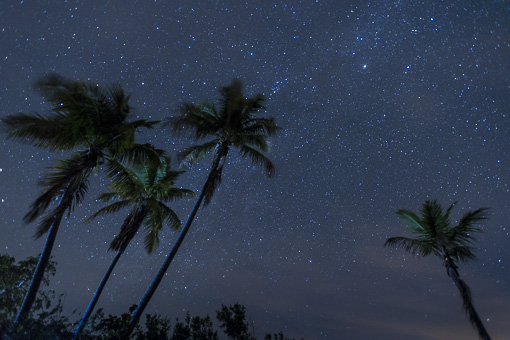
On a moonless night last January, coconut palms are silhouetted against star filled sky at Bahia Honda State Park in the Florida Keys. With Nikon D610 30 seconds f 2.8 at ASA 1600. A series of similar time exposures at near by Sand Spur Beach were assembled into a time lapse making up the second half of the Talking Picture Postcard below.

The Florida Keys are a pretty magical place to visit, and I often become confused with the changing pace of time I experience on the island chain. Rushing down the highway from Miami my body struggles to slow down and relax. Gotta answer emails, gotta get to where I'm going. But by the time I make it below Marathon, about Mile Marker 40 or so, I'm looking off at the blue Atlantic from up high on the Seven Mile Bridge, the sun is shimmering off the wave tops, and I see a lone sail boat miles off at the edge of the Gulf Stream. 


Real time video captures a slow moving sailboat for 19 seconds, and then an hour long time lapse reveals stars rotating above the ocean at Bahia Honda State Park in this 36 second Talking Picture Postcard. Field-recorded natural sound captured nearby. iPhone & iPad link or if your receiving this by email.

That boat is barely moving, it's is so sloooooow, just a tiny triangle of sail on the horizon. Time seems to stand still. The Keys' magic dust is sprinkling down on me now, transforming my fast time to Keys time, slow time, time to take in all the sun and water and stars up in the pitch black sky. In a blink I find myself on the beach, long after sunset, hours from the moon rise, I'm soaking in all those pin pricks of light  I forgot even existed.

Time to write home about this time warp I'm experiencing, but not the fast way by posting to social media. I'll take the old fashioned way, I'll write on the back of a postcard a couple of lines, stick a stamp on it, scribble an address, and mail another Talking Picture Postcard.

Thursday, December 19, 2013

Sounds Overheard: Smog, Muzak & Crickets


The 13 story tall Iron Pagoda of the Buddhist Youguo Temple dating from 1049 pierces the smoggy sky last September in Keifeng, Henan Province, China. 

 
Ambient sounds recorded in Iron Pagoda Park range from tranquil to chaotic: 0:00 gabbing tourists, 0:14 background music on loud speakers, 0:31 parakeets for sale,  0:46 children's train ride, 1:23 cooing while feeding pigeons, 1:40 grand children & grannies, 1:48 crickets compete with music in quiet corner. Direct link for iPhones & iPads or if receiving post via email.

One of the surprises of traveling off the beaten tourist track in China is finding authentic photographs and sounds in not so glamorous places, so as dawn broke over Keifeng in China’s Henan Province, I was excited to get going.

This being my eighth trip to China, I knew from experience that Sunday morning last September that I could stumble onto interesting people doing interesting things in colorful ways.

Once in Yunnan I left a history museum tour and discovered a bride and groom in full wedding regalia strolling through the park. A random turn off the highway led to Buddhist monks in Qinghai inviting me into their yak hair tent to listen to eight-foot-long horns. In Inner Mongolia I sipped warm horse milk inside a yurt and met Westernized tweens texting in bunny slippers. All these chance encounters made terrific memories.


Early morning exercises follow well worn track around trees in park surrounding the Iron Pagoda in Kaifeng, city of five million on the banks of the Yellow River.


This morning as the sun rose it feebly punched through the thick gray smog. Buildings across a four lane street were obscured, and it was hot and humid too. Ugh, I thought as I optimistically entered the park surrounding a temple. There had to be a picture here in spite of the horrible light. There had to be sounds of everyday life here somewhere.


Yes and yes, within minutes I found both,  photographs and ambient sounds depicting off the beaten path China. Maybe not as colorful or glamorous as my other Chinese experiences, but authentic enough for another terrific memory.

During my assignments and travels I've been recording the sounds I overhear, and many don't have supporting photographs or stories. This occasional series will be my excuse to share my audio orphans, these Sounds Overheard.

Tuesday, April 30, 2013

Best (Kayak) Camera Is The One That's With You


Fish Eating Creek overflows live oak and palm tree forest last October near Lake Okeechobee. Shot with Canon PowerShot S100 point 'n shoot digicam.

Today I'm attempting to connect the dots between a weekend conversation, a trending style of internet photography and, lastly, staying creative while paddling a kayak. Let me know If I've succeeded ...

Sunday I had my photojournalist hat on while on assignment at the Miami’s Marlins Stadium, shooting two foster children and their adult mentor for an upcoming multimedia program. I had my two Nikon D300 DSLRs with three zoom lenses while I worked in and around the fans seated near my subjects, when a young woman asked what I was doing. I explained the story, and she said “wow those are pretty nice cameras, you must be getting great photos”.

Most professional photographers have heard such remarks many times, and I admit, even my 2008 era digital cameras, now a generation out of date, do allow me to make images in difficult situations. In the stadium, I needed wide angle to telephoto focal lengths, a fast motor drive and good low light capabilities.


Rainbow at sunset this January while paddling in Atlantic Ocean off Bahia Honda Key. Shot with Canon S100.

But it’s not the camera that makes the photograph, I thought to myself, it’s your story telling eye, your vision of the world and your people skills that capture the images.

In a rush, I not very eloquently told her that such cameras "help, but you still need a brain!”

Just because I go out and buy a set of law books doesn’t make me a lawyer, nor having the cash to buy a Ferrari won’t make me a race car driver. Heck, even buying the latest and most expensive Nikon won’t make me a better photographer. (Note to Santa, a Nikon D4 and a D800 would be sweet!)


While paddling the back country in Everglades National Park's 10,000 Islands area, I photographed wave details with Nikon P6000.

Several years ago photographer Chase Jarvis’ The Best Camera Is The One That’s With You became a sensation,  in which he urged everybody to just use that camera phone in you pocket. Shoot what you see and experience every day. It’s your creativity that matters, not fancy equipment nor exotic locals. Keep it simple, and practice practice practice.

Sorry this post is not another iPhoneography convert having fun with cool camera apps. I’ve used my iPhone camera a little, but somehow that internet phenomenon of post processing camera phone photos with colors, effects and borders hasn’t clicked for me. I’ll leave that to others, including friend Steven Boxall’s I Shoot You Long Time blog.


Clouds are icing atop Miami city skyline during paddle around Elliot Key in Biscayne Bay. Nikon P6000.

But my creativity and insatiable curiosity about nature and the outdoors gets going the moment I sit in my kayak, launch onto open water, and I pull out my digital point ’n shoot camera to document what I experience and discover. I used to paddle with my DSLRs and long lenses, but once I began to  record audio from my kayak, I was carrying to much gear to have any fun. My current Canon PowerShot S100 is about the same heft and volume as my iPhone yet packs a lot of capability. 

It goes without saying that only having my point 'n shoot with me in my kayak makes that camera the best at hand. And as long as I “... still need a brain”, I'll make out just fine.


Dry season on Nine Mile Pond in Everglades National Park forces me to share shallow water with several alligators. Note, as your review mirror warns, wide angle lens makes six-foot gator seem further away than reality. Nikon P6000.

Friday, May 28, 2010

Film Or Digital, Panoramic Landscapes China Bound

Yesterday I was preparing a collection of panoramic landscape photographs to be exhibited in July at the Qinghai Sanjiangyuan International Photo Festival in China, and while rescanning some of my favorite large format film images I compared them at pixel level to my recent panoramas stitched in software from multiple digital captures.

Rocky Mountains at Lake St. Mary, Glacier National Park, Montana, captured on 617 format film ( 2 inches tall by 7 inches wide ), large format view camera.

I had forgotten about film grain! Slow speed digital doesn't have any. Film horizons are straight lines! Rotating a digital sensor in a circle for a stitch curves the horizon and you need to hide the distortion. Light table viewing of film with 4X loupe misses seeing tiny cars parked a mile across mountain lake! Processing digital on a giant computer monitor you see all the flaws.

But I quickly stopped pixel peeping and was transported back to those outdoor locations to soak in the beauty I experienced when the shutter clicked, and realized it really didn’t matter if I was capturing my small slice of the world with a piece of film or a digital sensor.

Pretty obvious really, the story, emotion and sense of place in the photograph is what matters.

 Hammock filled with and bald cypress and air plants, Everglades National Park, Florida, 220 degree digital assembly.

I can’t say which panorama making technique I like the best. With film, I have to slow down, think and be deliberate, as it requires setting up a heavy tripod, assembling the view camera rails and bellows, then attaching a lens. This makes me choose my subject carefully.

Under a dark cloth, I view the image upside down, so the scene becomes abstract, helping me balance my composition. I then remove the cloth, insert a preloaded magazine, and have four shots on one roll of film. Oh, exposing color transparency film is tricky. And nerve wracking, each frame costs the equivalent of a small cheese burger.

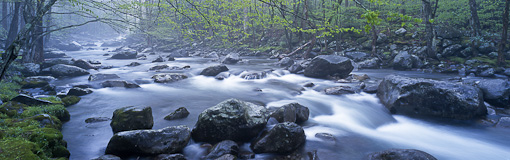
Spring mist rising on Roaring Fork, Great Smoky Mountain National Park, Tennessee, 617 format film.

With digital, I quickly set my Nikon vertically in a special rig that allows me to swing around the lens nodal point, and I can zoom to compose precisely. My “35mm” lenses allow me to get into tighter spaces and see higher and wider. Long time exposures are linear as opposed to film, so no reciprocity failure to calculate in, and the camera processes out the noise. And with digital capture being “free” ( not counting the massive investment in upgrading cameras, computers and software ), I save a lot of cheeseburgers. Yum.

Maybe creating panoramas with digital cameras is quicker and easier. Yet film is more contemplative and precise. So I’ll just pick the tool that works best for my subject and creative ends.

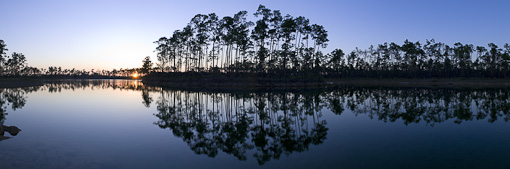
Sun setting in endangered pine woods, Everglades National Park, Florida, 170 degree digital assembly.

I'm looking forward to visiting Qinghai, one of China’s least populated provinces with not quite six million people ( out of 1.2 billion ), and it’s nestled up against Tibet to the West. I’ll be traveling with colleagues Nancy Brown of Boca Raton and Tania D’Avigon of Boston, both have also been to China multiple times, and we will drink a toast or two with our Chinese friends from previous trips.

The photo festival has invited many “foreign photographer friends” to attend and exhibit, including our American Society of Media Photographers South Florida chapter, which has sent their Light of Florida photography collection.

If you are interested in seeing the panoramic cameras used for these photos, I’ve posted a little more information on my Miami panoramic photography portfolio site.

Wednesday, April 28, 2010

Talking Picture Postcard - Mangrove Creek Songs


My favorite kayaking destination here in South Florida is any waterway that takes me though a tunnel formed by mangrove trees, a path that almost blocks out the sky above and forces me to inch along a glassy smooth tidal creek deep in the back country.

Earlier this month I spent four days paddling the 10,000 Islands area off Florida’s South West coast, putting in either at Everglades National Park’s Chokoloskee Bay ranger station in Everglades City, or off  the Tamiami Trail in the Big Cypress National Preserve.


On a Monday I quickly paddled past the off shore mangrove islands dotting the bay and entered Half Way Creek with a rising tide, utilizing the powerful tidal flows to my advantage. In about an hour I was wrapped in a mangrove canopy completely encompassing the narrow creek, all sound reduced to my splashing paddles.

Then I heard them, two different song birds, one hidden just out of sight in the thick red mangroves, it sounded like it was right on top of me, and the second, I guessed a different species, off at a distance. They seemed to be playing a duet, one trilling upward, and a moment later the closest one singing a six note refrain.

Water dripping from my paddle was the only sound between the songs. Using my recorder's built in stereo microphones I could hear in my headphones the notes echo back and forth through the mangrove tunnel and off the water. (If you’re a real sound geek, try ‘phones to hear the separation, water drip and mosquito buzz.) Then the birds flew off, leaving me in complete silence.

Halfway Creek flowed into the Left-Hand Turner River, and finally the mangrove cover opened up to small shallow ponds where sunlight rippled through tannin colored water, and when I entered Turner Lake, I paddled blue back country waters.

Turning South onto the Turner River I rode the outgoing tide back into Chokoloskee Bay, already missing my intimate mangrove tunnels and their hidden singers

Here's a link to more multimedia photography Talking Picture Postcards.

Thursday, February 11, 2010

Wide & Skinny Panoramic Photographs


Even though I’ve been distracted in recent years photographing with digital cameras and their traditional format, I always enjoy returning to view the world in the wide and skinny panoramic format.

I’m forced to see in different terms when my picture telling canvas is three times as wide as it is tall. Sure the rule of thirds aids my composition, but mostly I lead the viewer’s eye from left to right or vice versa, allowing them to roam along and discover the exciting corners of my narrow frame.

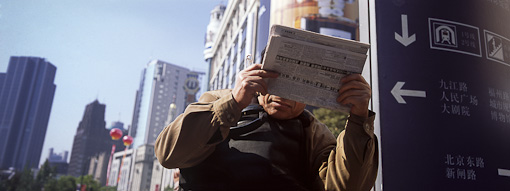
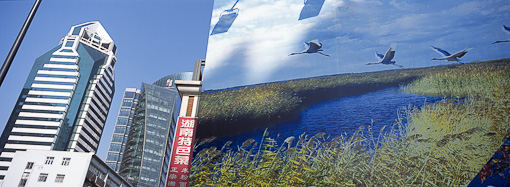
In China last Fall I used my Hasselblad XPan II for both street photography and landscapes. Here a morning commuter reads his morning newspaper outside the subway stop at the end of busy Nanjing Road in Shanghai.

The X-Pan is a 35 mm film camera that is small and portable and focuses with a traditional range finder. You look through the clear view finder, not the actual picture taking lens as a single lens reflex, and frame your photo with brightly outlined frame lines. With no auto focus motor you actually turn your fingers to focus, lining up two frosted rectangles. I gotta admit, sometimes in switching from my SLR to the X-Pan and seeing everything sharp, I forget to focus.

Continuing to walk the chaotic streets of Shanghai, I selected this nature-landscape-within-urban-jungle combo. Click photo to enlarge.

Generations of street photographers have utilized rangefinder cameras in their work. The cameras are quiet and stealthy, and being unencumbered with all the latest auto everything, micro processors and super telephoto lens, your mind is clear to really make photographs. I do utilize the XPan center weighted aperture priority auto exposure, and the motorized film transport frees up my thumb for hanging onto the camera.

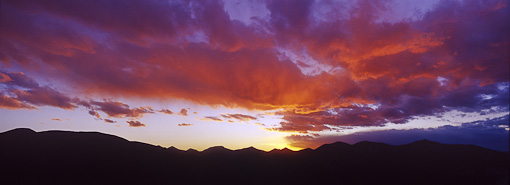
This November landscape shot was captured at sunset in  Sichuan, China, as we crested a 14 500 foot pass.

Often one thinks of panoramic photography when they need a wide angle view to encompass a dramatic landscape ( Here are examples of large format panoramic photography. ), like the Grand Canyon at sunset, but use of a pan camera need not be limited to landscapes. I use the format to extract bits from my confusing surroundings, some times very tightly, and to hand hold during people photography.

In panoramic the aspect ratio of width to height is at least 2 to 1, with 3 to 1 being my favorite. The XPan is 2.6 to 1. Any wider than three times the height, you have difficulty viewing in traditional display prints or in print publications, however on the web very wide aspect ratios work well in virtual reality applications. 

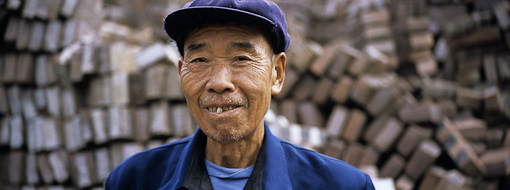
On an earlier China trip several years ago the XPan street credentials help me capture this brick yard worker

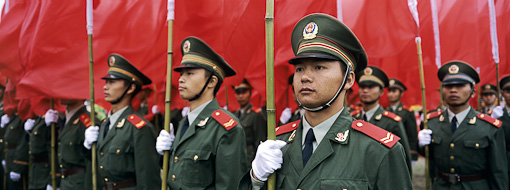
and these People’s Liberation Army soldier flag bearers at a festival opening ceremony.

The XPan is no longer manufactured, a victim of the decline of film photography, and prices on E Bay continue to be very strong.

Having E-6 color transparency film processed is a challenge now, with not one single South Florida lab reliably running it. I now express ship film to BWC Photo Imaging in Dallas, much more complicated and expensive than just a few years ago when two hour turn around at more than a dozen Miami labs was routine.

I love the advantages of digital and have never looked back since switching from film for assignments in 2006, yet for quietly capturing those wide and skinny photos of people, I’ll stick with old fashioned film and my Hasselblad XPan.


Thursday, December 31, 2009

Open Mind Discovers Florida Keys Photos


This month I spent a windy, overcast and for us Floridians a chilly week in the Florida Keys enjoying the out of doors and taking a break from pushing pixels around on a computer screen.

No long philosophical essay here on the renewal of creative juices for those in the visual communications business. Nor will I evoke Henry David Thoreau’s Walden Pond to describe the spiritual benefits derived from being out-of-doors.

Just a short note to say I love the outdoors and being alone for a few days with nothing I have to do, and lots of optional creative outlets - photography and sound recording - available should I be moved to leave my campsite reading chair or find ocean kayaking in 30 mile per hour wind no longer relaxing.

You may click on any of these photos to enlarge them.


Without the pressure of having to produce a photograph to a client’s specifications I wandered about Bahia Honda State Park - one of the most beautiful state parks in the country and which has a beach once voted the best in America - struggling to abandon any previous techniques that would box me in to capturing the same old same old photo.

I arrived late in the afternoon and set up my tent in the wind and rain, and it was after “sunset” that I was walking along Sand Spur Beach on a very gray day when I noticed lightening bolts opening up the inside of storm clouds off shore in the Atlantic Ocean. “Thats cool”, I thought, all lit up from inside.

I threw my camera on a tripod, guessed a 30 second time exposure at F 11 might blur the water and if I was lucky I might catch a lightening flash. I was lucky, on the first frame only and created a photo I had not anticipated.


During the day I was looking for a way to make the drab, flat, overcast light interesting and was poking around the dry, sandy scrub land that makes up the interior of the island. I noticed some new bright green Sea Grape leaves, about five inches across, and wondered what they would look like if I lit them with just a light from behind. I placed a flash underneath, blew the light through a white diffusion cloth, and exposed to see the veins and detail thingies inside the leaf. Sorry I’m not a botanist, but I loved finding a new way to discover the complexities of a leaf.


The next evening there was a five minute window at sunset as the sun sliced under the heavy cloud cover and skimmed from the West right along Sand Spur Beach, highlighting the wave ripples as they quietly created patterns that changed several times a second. Here a telephoto lens and fast shutter speed gave me a new insight.

Here's a link to more editorial photography from Florida.

Monday, December 14, 2009

Still Photos Tell Time With Time-Lapse Photography


With some basic experiments in time-lapse photography I’ve been tackling one of the conundrums of multimedia audio slide shows, how do you depict the passage of time with still photographs that do not move.

You may click on photo to see larger.

Below is a 12 second Quick Time movie depicting stars rotating around Polaris - the North Star - in Everglades National Park earlier this year. Or click here for a full size version. A photograph was made every four minutes over 72 minutes, from 12:38 Am to 1: 50 AM, and when assembled to play over 12 seconds, the rotation is really cool.


Slide shows posted to the web have to grab the viewer’s attention and keep it or they will click onto something more interesting, like kittens clapping their paws in time to music on You Tube. Keeping the story’s pace moving and varied is important and can be done in several ways;

  • limit the time each still photo is on screen to under six seconds or so
  • vary the screen time from image to image
  • utilize close up detail photos to balance wide scene setters
  • make sequences of the same portrait setup varying subject size & placement in frame
  • pan across a photo with a “Ken Burns” effect
  • and lastly, utilize time-lapse sequences of still photographs


In the above 22 second Quick Time movie shot on South Beach this Fall at sunrise, 55 photos were captured at five second intervals over just five minutes. A full size version can be seen here. By the way, all three movies attached here are accompanied with natural sound recorded on scene.

Cinematographers have been using time-lapse photography since the early days of movies by capturing each frame of film at a rate much slower than will be played back. A regular feature film is shot at 24 frames a second, and when projected at the same frame rate the motion seems normal to us. Filmed at a much slower rate but played back at 24 fps, the action is sped up. (If shot at a faster frame rate, but played back at 24 fps, we perceive slow motion. ) We’ve all seen time-lapse sequences of flowers blooming, where one frame is shot every hour or so and petals slowly unfold, or a glacier receding from year to year, with one frame per day captured.

Changes across time too subtle for the human eye to detect, such as stars moving in the sky or the sun rising, are slowed down for our study and enjoyment by a slower replay frame rate


From the 47th floor penthouse looking South in August down Miami Beach’s Collins Avenue, the Atlantic Ocean on the left and downtown Miami at upper right, shots were made every 30 seconds or so over 37 minutes for this 21 second Quick Time movie. Full size version available here. I enjoy seeing the clouds slide by, a boat zip up the intra-coastal and post sunset glow settle onto the city.
This sequence with fewer frames included opened the multimedia show I wrote about here.

Time-lapse photography is adding a fun dimension to my multimedia projects by allowing me to show the passage of time. And I'm combining the outdoor and skyline photography I love with my photojournalism and environmental portraiture.

Here's a link to more Miami multimedia photography.

Wednesday, December 9, 2009

Audio Recording Leads To Pelican Rescue

Sunday I decided a peaceful kayak paddle on Biscayne Bay was a terrific way to enjoy the mild Florida weather and a great opportunity to record quiet ambient sounds, so I grabbed my sound recording gear and Nikon digital point n’ shoot camera and launched just five minutes away from my home. As I left I had no idea I was going to rescue a pelican from certain death nor be cursing the noisy skies above.

You may click on any photo to view larger.

Enjoying the sensation of floating freedom the first few paddle strokes, when my body realized I was not rushing through a metropolis of 2.2 million people, I threaded between a half dozen low mangrove covered islands. In this part of Biscayne Bay, which runs North 35 miles from the Florida Keys and is sandwiched between the Miami Beach barrier island and mainland Miami, I felt as if I was in the wild, yet I was surrounded by urban skyline all around. Sunday I could understood artist Christo’s  fascination with these islands which in 1983  he wrapped in miles of hot pink plastic for his Surrounded Islands art project.

One island is a popular rookery for water birds, allowing osprey, brown pelicans, white ibis, cormorants and even magnificent frigatebirds , which have impressive air filled red pouches and long forked tails, an isolated haven for safe nesting sites. Floating off at a reasonable distance as not to disturb them, I powered up my recorder and shotgun mic to record their raucous clamoring.


I’m not a birder, but I could distinguish the throaty clack-clack-clak of the cormorants and the angry screeching of a great blue heron. And with headphones it sounded like I was deep into a far off wilderness. Well, for about 60 seconds ... off in the distance I heard an airplane, a jet coming closer and louder, finally a roar in my ears. I waited for it to go away, and started recording again. Less than a minute later, another jet.

I quickly realized Miami International Airport was sending flights almost exactly every minute off over Biscayne Bay, and on top of me and the rookery, as the wind was coming inland from the Atlantic Ocean. And soon I picked up the mile off go fast boats, roaring up and down the Intracoastal Waterway , and then a propeller plane pulling a sign that read “I luv u Amy, will you marry me? Omar.”

What the heck, I decided to incorporate the jets into a sound clip, plus some peaceful wind blowing through island palm trees and water lapping on shore, recorded in the 30 seconds of relative silence between jets. It's 1:30 long.


By the time I left the rookery, the wind was blowing with light chop and rain squalls were passing over the bay. I headed for a more southern island, and hugging the shore, I turned a bend and was startled by a pelican less than a paddle length away. He was sitting just above the water on a mangrove branch. I said “hello”, and moved off not wanting to disturb it. But about 100 yards down the island, it struck me that something did not seem right. Pelicans always fly away from large orange kayaks.


I turned around and paddled back, approaching the pelican again and looking closely I could see it was thoroughly tied down with fishing line. I could even see a lead sinker half an inch across.  Carelessly discarded fishing tackle is a major threat to pelicans in Florida, as they can swallow baited hooks or be caught during a cast. In May I photographed Wendy Fox, the Executive Director of the Pelican Harbor Seabird Station for The Chronicle of Philanthropy, and I had seen dozens of injured and recuperating pelicans at their facility just a couple of miles up the bay from this poor fellow.

I knew from watching Wendy teach an intern how to handle pelicans that I did not have the special skills to catch a wild bird with a 10 foot wing span, and I certainly had no veterinary expertise. But this spot was in water about two feet deep so little small boat traffic passed by, and I had to do something. No telling how long it had been trapped, it could be starving to death for all I knew. I paddled over to the mangrove in the choppy water, and the pelican flapped and spun around on it’s fishing line tether. 

I cursed not carrying a knife with me, but I was wearing paddling gloves, so I figured I could at least break the line. With the bird squawking and throwing it’s beak about, I noticed a brass clip holing an 18 inch leader to a large hook caught deep into the center of his back. Bad luck for the bird, good luck for me as it was an easy fix, and the moment the bird felt the tension release, it flapped off into the water under  thick mangroves.

I really didn’t want to capture the bird and paddle it to the Seabird Station, but I had to make sure it wasn’t half dead. I beached the kayak, crawled under the mangroves, shooing the bird into open water, where it flew off. I was relieved to see it seemed vigorous, and hopefully the hook could remain in it’s back without harming him for the rest of his life.

I gladly joined the large club of Florida boaters who have rescued sea birds, and paddled off looking for more sounds to record, wondering if Amy took Omar up on his proposal.

Here's a link to more Miami multimedia photography.