Showing posts with label Heart Gallery. Show all posts

Wednesday, July 31, 2013

Surprising Guided Conversation With Foster Child

Every interview is a guided conversation, but in spite of where I think I may be headed with my reporting, my subjects always lead me down paths unanticipated, and frequently they surprise me with their insight.


Foster teen Isaac and his adult mentor Barbara K. have developed a lifelong bond through weekly Saturday visits. iPhone & iPad link. Video by Paul Morris.

My journey down one of those paths began when I answered the phone back in March. Barbara Schechter, Executive Director of the Heart Gallery of Broward County (FL) was on the line wondering if I had any ideas on how to recruit mentors for her children living in foster care. Besides organizing a traveling photography exhibit of children waiting to be permanently adopted, the Heart Gallery provides innovative programs that enrich the county’s foster children.

I suggested we produce a multimedia piece featuring one adult mentor who has developed a successful relationship with a Heart Gallery child so we could tell the story through their eyes and in their own words. I’ve found viewers easily relate to the combination of photojournalism and audio story telling, what I call Public Radio With Pictures.

 Isaac, 13, leaps into mentor Barbara K.'s swimming pool during weekly Saturday visit. Still photographs by Tom Salyer

While Barbara set to work finding the subjects, I began researching mentoring on social service agency web sites and building a list of keywords that would help us filter our story telling decisions. What activities should we photograph, at what locations and the questions we should ask? Why are we making this film?

My keyword list included: guidance, friendship, relationship, trust, sharing, teacher, listen, adult, growth, role model, permanence, family problems, self confidence, support, patience, time, heart, consistency, commitment, approval, the future. Shortening the list to four or five, I was able to state the purpose of the film in one sentence:

Mentors provide children living in foster care with positive adult relationships that encourage trust, self-confidence and friendship.

During a brief telephone pre-interview with our adult mentor, Barbara K. described how for two years she has called 13-year-old Isaac every Friday afternoon to talk about their Saturday plans. Keyword consistency. How they went swimming and made cookies. Keyword friendship. Washing the car, doing homework and attending a baseball game would make great locations. While drawing up a list of questions I tried to anticipate the arch of our story, how to open, our subject’s journey and a final resolution.


Mentor Barbara K. lets her dog lick cookie dough as Isaac, who lives in a foster care group home, looks on.

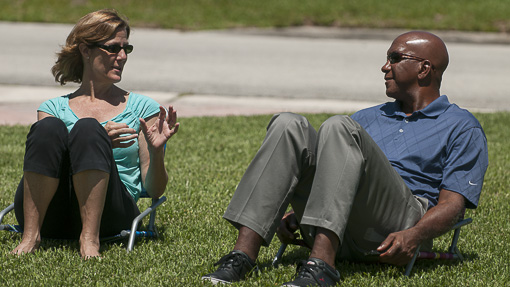
On interview day in April colleague Paul Morris, running the video cameras, and I were joined by Barbara Schechter and new Heart Gallery Executive Director Ken Crooks. First we interviewed Barbara K., who quickly gave us unanticipated answers.

Among the reasons she wanted to be a mentor:

Selfishly, I have two grown children in their 40s, neither one is married, neither one has any children. I wanted some grand children!

Wrapping up her mentoring experience:
  
I hope that what ever happens to Isaac that he’s in my life ... forever... you’re have  friend for life, you really will.

When we asked Issac our written question about what his life was like before foster care, he firmly stated he didn’t want to talk about that. But later he offered this unanticipated journey:

I really love Miss Barbara because she is always there for me... like when I do bad stuff, and she tells me the right things to do, like when I ran away...she’s like, Isaac, you should of never (done) that, you could of gotten hurt, and...nobody could of found you, and you could of been dead...

One more guided conversation full of surprises.

This video “Miss Barbara Is Always There For Me” will be posted on the Heart Gallery’s web site, on YouTube and shown live at foster family and adoption training and fund raising events.


 Former Heart Gallery of Broward County Executive Director Barbara Schechter, left, and current Executive Director Ken Crooks supervise car washing scene during filming of "Miss Barbara Is Always There For Me."

Technical Notes:

Paul Morris recorded the video with Canon 5D Mark II and Mark III cameras and lenses. During my still photography, I recorded the ambient sound and conversations with concealed Tram TR50 lavalier microphones and Sennheiser G3 wireless units, and the interview with a boomed Sennheiser MKH 8050 hyper cardioid. I edited stills in Adobe Light Room and Photo Shop, and assembled the video in Adobe Premier Pro and Audition CS 6.

Friday, March 8, 2013

Single Woman Adopts Brothers With Rare Syndrome

I've had a lot of fun photographing portraits of orphan children living in foster care for the Heart Gallery of Broward County (FL), and like the more than two dozen other professional photographer volunteers, have felt the thrill of seeing our subjects find adoptive homes.

Upon viewing the portraits for the first time, prospective parents often report an instant connection to the child. Putting the faces of a real children onto dry case files is why over 100 Heart Galleries in the USA exist.


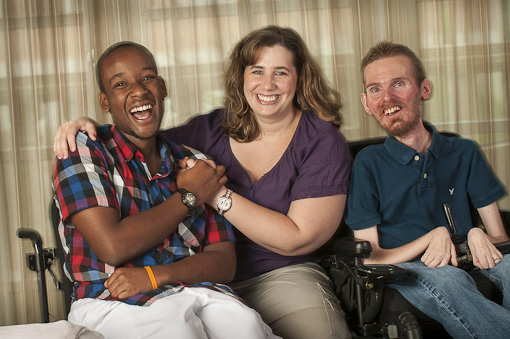
Brothers Royce and Noah paused for a rare quiet moment in the group home bed room they shared when I photographed them in 2009. Now ages 18 and 14, they've been adopted out of foster care. Born with 5 p minus, they are developmentally at 4 and 5 year-old levels.

This week I realized the handful of hours we photographers contribute are really nothing compared to the commitment and devotion required of  the adoptive parents and their children in creating new families. Heart Gallery Executive Director Barbara Schechter has written this week a newsletter story about a 28-year-old single woman who adopted two teenage brothers who have the same rare genetic disorder two of her siblings were born with. Tabitha found the boys from a photograph after ChildNet, the private agency contracted with the State of Florida to facilitate adoptions, used innovative recruitment techniques to find her.

Young Mom Adopts Brothers With Rare Genetic Syndrome

By Barbara Schechter

Royce and Noah have been in foster care most of their lives. They have been photographed for the Heart Gallery and featured in Forever Family news segments several times over many years. They are gentle, sweet boys, now ages 18 and 14, but their rare medical condition, known as 5 p minus, scares most adoptive families away. People assume that their needs are more than they can handle - times two.

"Too much to handle" never even occurred to Tabitha, a single, 28-year-old woman who adopted the boys last fall. As soon as she saw their photo, she knew that she wanted to adopt them. 5 p minus, also known as Cri du Chat Syndrome, has touched Tabitha's family deeply. She is one of ten children, two of whom were born with this disorder.

5 P Minus occurs in only 50 to 60 births a year. It requires lifelong therapy, but the children are usually friendly and happy. Most can have a normal life  expectancy and lead full lives. Royce and Noah are developmentally at 4 and 5 year-old levels.

The connection between Tabitha and ChildNet was the result of some creative family finding on the part of Jessica Samuels, Wendy’s Wonderful Kid Recruiter at ChildNet. “No one ever called about these boys. I knew I had to try something different”. So she Googled and found the Five P Minus Society, a support organization for families of children with the syndrome. Jessica contacted the Society and they permitted her to submit a short article for their newsletter along with their Heart Gallery photo. The rest is the beginning of an amazing journey…

As soon as Tabitha saw the photo of Royce and Noah in the newsletter, she got on the phone to Jessica. Jessica then sent her a Forever Family video and she knew that they were supposed to be her boys. She came to Fort Lauderdale from out of state three times to get to know them and every time found it difficult to leave. Royce and Noah are much higher-functioning than Tabitha’s siblings, one of whom died right before Tabitha decided to adopt. In fact, their ability to speak and interact has brought her family close to them and created a wonderful support system for this single parent.

The boys lead busy lives that include special needs scouting and Special Olympics (three sports!). Tabitha left her job as a special education teacher to care for the boys. Her training has helped her to anticipate their emotional and social needs. They have adapted beautifully to their new life.

Gia Tutalo-Mote, of Forever Family, sums up our sentiments. “It thrills my heart to know that Royce and Noah have finally found that loving forever family we’ve been searching for. This proves once again that there is a family out there for every waiting child.

Heart Gallery Updates: Celene, the Heart Gallery teen who declared "Adopt Me, I'm Unforgettable" in an audio slide show featured on this blog in 2010, was adopted in 2011. Her friend in the video, Sheaundra, now 18, was just adopted this month, along with her now adult brother, by the same family. Laterence's adoption, featured here last September, should be finalized this month. Teenager Corey, who admitted struggling in foster care after the death of his mother, has turned 18 and "aged out" of the foster system and is out on his own.

Tuesday, September 18, 2012

These Wheels Are Walking Wheels: Disabled Teen

When Laterence was just three days old, his mother realized that because of his disability she could not care for him, and straight from the hospital placed him in state custody. Now a teenager, he has been living in Florida's foster care system all his life, with families and in group homes, all the while hoping he would be permanently adopted by a loving family.


This multimedia piece incorporates video, still photos, interview and field-recorded natural sound. iPhone & iPad friendly link.

Four years running his photograph has been in the Heart Gallery of Broward County (FL), a traveling photo exhibit of foster children available for adoption. Hoping to spark frank discussions around adopting children with disabilities, the Heart Gallery commissioned this multimedia audio slide show. The show will be utilized by social service agencies charged with recruiting and training adoptive parents.

Laterence - he prefers LT - is now a very articulate 15-year-old, and in this three minute story he narrates his emotional journey and has advise for prospective adoptive parents.

Does LT ever find his "forever family"?


 From left, LT gets to know Jennifer and Brad during visit to South Florida in July.

This multimedia piece could not of been created without collaboration with colleagues, as there are just to many moving parts for one photographer to keep track of when video is incorporated into narrative story telling.

My hands were more than full with recording the audio while conducting the interview, so Paul Morris helped me by recording the A roll on two video cameras, then picking up B roll afterward. Heart Gallery Executive Director Barbara Schechter helped me plan the coverage, conduct the interview and shape the editing of the piece. Miami video journalist Chuck Fadely gave me invaluable feedback. And of course we would be unable to tell this story without LT, Brad and Jennifer.

Notes for still photographers beginning to work with motion capture ... it’s not rocket science nor do you need a ton of expensive gear. First, you need a great story, and then you must shape a compelling narrative arch that captivates your audience.

- Video cameras, Canon 5DMarkII & Canon 7D (no rigs, EVFs, focus assist)
- Video camera rolling wheels in mall, Canon s100 point ‘n shoot
- Still cameras, Nikon D300
- Interview Mics, Tram 50 lavalier & Sennheiser ME 64 cardioid; wild sound, Giant Squid
- Sound Devices MixPre D field mixer & Tascam DR 100 recorder
- Adobe CS 5.5 Premier Pro, Audition & touch of After Effects

 Please visit my Miami commercial photography portfolio.

Thursday, April 21, 2011

“I Hate Moving Around”, Teen Wants Adoptive Family

In the card game of life, the dealer has given Corey more than his fair share of tough hands to play. When his mother died two years ago while he was 14, it was after her long struggle with self destructive behavior. His father had long disappeared from his life, and the State of Florida became the orphan's only parent.

His first foster care placement found him forced to clean house and do chores while the family’s biological teens did nothing. “So I went on runaway”, Corey says, and he’s bounced from one placement to another ever since. Temptations not resisted led to spending a year at a structured camp on the edge of the Everglades.


Teenager Corey describes his life in foster care and why he wants an adoptive home.
iPad friendly version.


Corey is the subject of the second multimedia audio slide show I’ve produced on commission for the Heart Gallery of Broward County, the traveling photographic portrait exhibit of children in foster care that long for permanent adoptive homes. Only one in ten teens are adopted from foster care, and multiple agencies will deploy the shows in recruitment and training seminars and on line hoping to improve those statistics.

Last October Corey finally moved to a Broward County home where his foster mom “Miss Michelle” and foster brother “Q”, as he calls them, are providing a loving environment that he says he’s thriving in. He’s attending school, has a girlfriend, is pulling his weight at home.

It may be the momentary clarity of a 16-year-old, but he says he wants to become a chef  and attend culinary school after graduating from high school in two years. He’s done with temptations, he says, and adds “some people try to get you into doing bad things, but you just have to show them you are a leader and not be a follower.”

All Corey says he needs now is a family to adopt him, before he ages out of the foster care system at age 18. When be becomes an adult he knows the State of Florida will support him if he stays in school, but he longs for that permanent family. One that can sustain him and give him love, which he can return unconditionally.

Last month two teen girls’ shared their thoughts about why they should be adopted, and the advantages over adopting a baby. See more stories featuring Miami multimedia photography that blend public-radio-style interviews with photojournalism.

Saturday, February 5, 2011

“Adopt Me, I’m Unforgettable”, Foster Teen Dreams

Best friends Celene and Sheaundra are hanging out in the park together, seemingly typical teens giggling while swinging, gossiping about school friends and alongside a sun sparkled lake share whispered dreams for their future.

But unlike the other children playing in the park, these two girls have no families.  Both have lived in foster care over half their lives, orphans after the State of Florida severed their parent’s rights to raise them. They both long to leave their group homes and be adopted into permanent families.


Teens who’ve lived half their lives in foster care describe why they want to be adopted in this 3:10 audio slide show. iPad friendly version.

The problem is, teens in foster care have an uphill battle finding what the Heart Gallery of Broward County calls “Forever Families”, says Barbara Schechter, Executive Director of the Ft. Lauderdale based traveling exhibit of photographs featuring foster children who are available for adoption.

Of the 90 foster children currently featured in the Heart Gallery, 60 per-cent are teens, but only 10 per-cent, about six, will find permanent families, she says. With children under 12, adoption rates are much better, with 30 per-cent being adopted, and the percentages are even higher for those under eight years old.

Schechter believes some potential adoptive parents let unfounded or exaggerated perceptions about teens in foster care get in the way of their considering older children, fearing the foster care system has hardened children into uncontrollable or defiant teens.

At times, she says, teens “are set in their ways, they talk back, they don’t want to be told what to do or how to do it and they don’t like to follow rules”. Then notes, “actually, this could describe my own teenager”, and can apply to foster teens too.


Schechter suggests approaching teen adoption as a mutual decision between child and family, allowing plenty of time for both parties to get to know each other’s strengths and weaknesses. “Families who can be open about who they are and what they expect can help to make the matching process much easier for the child”. Teens are old enough to choose their family, she adds.

To help prospective adoptive parents start thinking about teens, the Heart Gallery commissioned me to produce a multimedia audio slide show featuring the voices of Celene and Sheaundra.

Teens in foster care often have some tough history, Sheaudra, 15, frankly told me in December, and that’s why they need a family.  “I think that’s why people kinda judge us. They think it’s our fault (we’re in foster care), but it’s not my fault ... because my parents made these mistakes, and I didn’t”. 

Celne, 14, thinks adopting teens is easier than adopting babies because “... teens are more mature and it’s easier for them to learn than a little kid ... (who) messes up the house, throws stuff, yells and has temper tantrums...”.

She’s a very self confident young lady when she wraps the multimedia show with “I should get adopted ‘cause I’m awesome, I’m smart, I’m mature ... I’m unforgettable!”

The Heart Gallery of Browad County is not only looking for people to adopt children, but also matches those willing to be mentors, donate time, become a child advocate or donate funds. They work hand in hand with Child Net, the private, not for profit organization that manages the child welfare system in Broward County for the State of Florida.

See more stories featuring miami multimedia photography that blend public-radio-style interviews with photojournalism.